

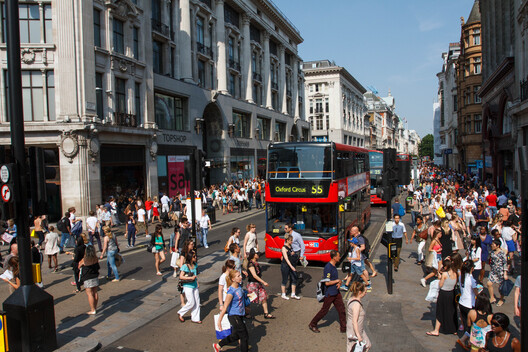
Across Europe and North America, pedestrianisation is increasingly being deployed as a context-specific urban strategy shaped by distinct economic, social, and spatial pressures. As cities continue to reassess the role of streets in the wake of economic shifts, climate pressures, and changing mobility patterns, pedestrianisation is emerging as a tool in current urban transformation efforts. Across London, New York, Houston, and Stockholm, ongoing pedestrian-first projects are testing different pathways toward more resilient and walkable cities, ranging from statutory planning and capital construction to research-driven visioning. London's Oxford Street is advancing through consultation and governance reform to address retail decline; New York's Paseo Park is moving from a temporary pandemic intervention into permanent infrastructure; Houston is accelerating the pedestrianisation of its downtown core in preparation for a global sporting event; and Stockholm's Superline is using design research to rethink the future of an inner-city motorway. These initiatives reveal how pedestrianisation is being actively negotiated, designed, and built today, adapting to local motivations while converging on a shared objective of streets that perform as resilient public spaces rather than traffic conduits.

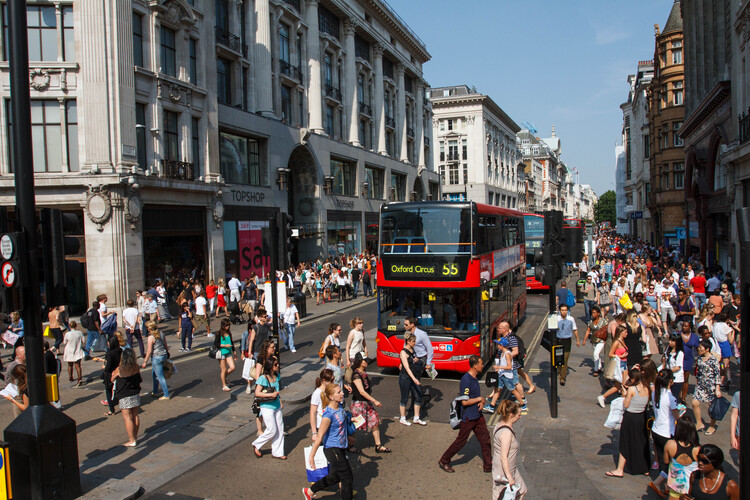
A Consultation-Driven Approach to Pedestrianisation: London Oxford Street's Strategy to Revitalise Retail
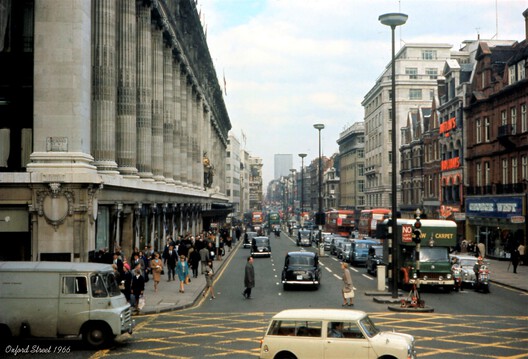
The year started with the Oxford Street Transformation initiative, originally announced with a formal public consultation launch on 28 February 2025 that invited views on establishing a Mayoral Development Area (MDA) and the principle of pedestrianisation. The project has progressed through several key statutory and design stages this year. The June 2025 consultation report documented broad public support, with nearly 70 % backing the creation of a Mayoral Development Corporation (MDC) and two-thirds supporting pedestrianisation of the road itself. In July 2025, the Mayor of London designated Oxford Street as an MDA, paving the way for the Oxford Street Development Corporation (OSDC), with legislation currently before Parliament to make it operational in January 2026. Transport for London, now the highway authority for the street, is leading a second detailed consultation on highways and traffic design changes to facilitate pedestrianisation, open until 16 January 2026. These steps signal a shift from conceptual consultation to statutory and design phases intended to deliver a vehicle-free public realm between Orchard Street and Great Portland Street as part of the wider regeneration strategy.
Related Article
Rethinking Public Space Through a Skateboarder’s EyesNew York Paseo Park: From Temporary Open Street to Permanent Pedestrian-First Urban Infrastructure
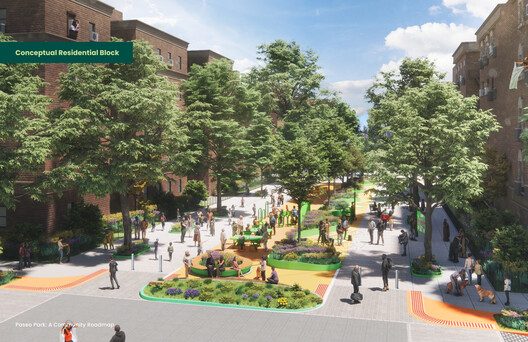
Paseo Park in Jackson Heights, Queens, exemplifies a community-driven transition from a temporary open street to a permanent pedestrian-centric urban space, advancing through collaborative planning and formal city capital design processes. Originating as an open street during the pandemic in 2020, the 1.3-mile stretch of 34th Avenue between 69th Street and Junction Boulevard was later co-named "Paseo Park" by the New York City Council to reflect its role as a valued public promenade and community hub. Today, the New York City Department of Transportation (NYC DOT) is executing a capital project to establish the city's first permanent Open Street, prioritizing pedestrians, shared streets, plazas, landscaping, and simplified corridor design, backed by ongoing public workshops and draft design feedback through early 2026. In parallel, the Alliance for Paseo Park has produced a community roadmap with conceptual priorities and design recommendations grounded in extensive multilingual outreach to guide future public realm improvements. According to the DOT project timeline, preliminary design work will begin in 2026, with schematic and final design phases extending into 2027–2028, followed by a future construction phase.
Downtown Houston Main Street Promenade: A Pedestrian-First Urban Corridor Ahead of the 2026 World Cup
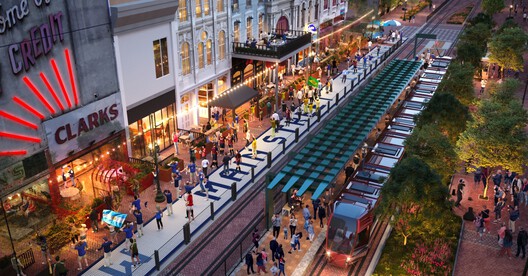
The Main Street Promenade project in Downtown Houston embodies a strategic pedestrianisation and public-realm upgrade of one of the city's historic thoroughfares through a clearly defined timeline and construction phases. Led by Downtown Houston+ in partnership with the City of Houston, the initiative builds on earlier temporary programs by permanently reconfiguring seven blocks of Main Street into an expanded, walkable promenade with plazas, shaded walkways, greenery, outdoor dining, and enhanced accessibility, connecting downtown districts from Dallas Street toward Allen's Landing with dynamic public space elements. Construction commenced on June 2, 2025, and is currently underway, with multiple blocks already substantially complete (expanded walkways in place and roadway work finished) while others remain active construction zones; full project completion is scheduled for June 2026, in time for Houston's hosting of the FIFA Men's World Cup. Vehicular closures are phased to maintain pedestrian access and minimize disruption to adjacent businesses, and the promenade will be maintained post-completion by the Houston Downtown Management District.
Stockholm Superline: Citizen-Led Vision for Transforming Centralbron into a Green Urban Boulevard
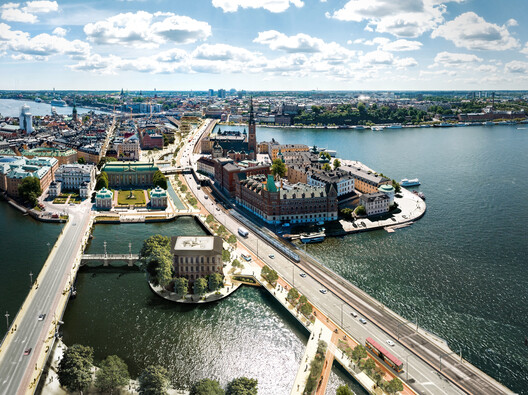
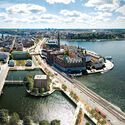
The Stockholm Superline initiative represents a citizen-oriented approach to pedestrianisation and urban transformation by reimagining the Centralbron motorway through the heart of Stockholm as a green, multi-modal boulevard that prioritises walking, cycling, and public space. Originating from the SUPERLINES research project (Nov 2024 – Sep 2025) led by design and planning teams including Spacescape and White Arkitekter, the project utilised scenario development, traffic analysis, design studies, and a web-based citizen survey to shape its proposals, with 77 % of the 2,500 respondents favouring a boulevard over maintaining the motorway. The vision proposes reducing Centralbron's six lanes to three and reallocating space for a continuous pedestrian and bicycle network enriched with greenery and water views, thereby halving car traffic, reducing noise and pollutant levels, and enhancing accessibility and quality of life in the inner city. Superline's outputs are visionary design scenarios and evidence for planning rather than an approved implementation plan, with no formal municipal adoption or construction start announced. The project's legacy is expected to inform future planning frameworks and methods for integrating pedestrianisation into Stockholm's street network.
Other recent developments in urban design include the groundbreaking of Tokyo's new global headquarters for NTT, which forms a key component of PLP Architecture's Tokyo Cross Park masterplan, a large-scale regeneration project in the Tokyo metropolitan area. In the United Kingdom, Plot C, Sister, a pair of linked commercial buildings located on the northeast corner of the Sister campus in Manchester, has received planning approval from Manchester City Council, representing the first major new-build phase of Manchester's emerging innovation district. From a governance perspective, European cities have announced new restrictions on short-term rentals, with Barcelona Mayor Jaume Collboni recently outlining plans to phase out tourist accommodations entirely by 2028 as part of a broader effort to protect residents' right to remain in the city.


